

You are here: OUSL / Faculty of Engineering Technology / Dept. of Mechanical Engineering
Hydrogen Energy and Fuel Cell Laboratory
A Proton Exchange Membrane (PEM) Electrolyzer and Fuel Cell laboratory instrument is an experimental platform designed to demonstrate the principles of hydrogen production, storage, and energy conversion through electrochemical processes. It provides a practical understanding of green hydrogen technology by integrating water electrolysis and fuel cell operation within a single system.
The PEM electrolyzer operates by using electrical energy to split water into hydrogen and oxygen gases. Inside the electrolyzer, water supplied to the anode side is oxidized, producing oxygen, protons, and electrons. The protons pass through the proton exchange membrane to the cathode, where they combine with electrons to form hydrogen gas. This process enables the production of high-purity hydrogen using renewable electricity sources such as solar or wind energy.
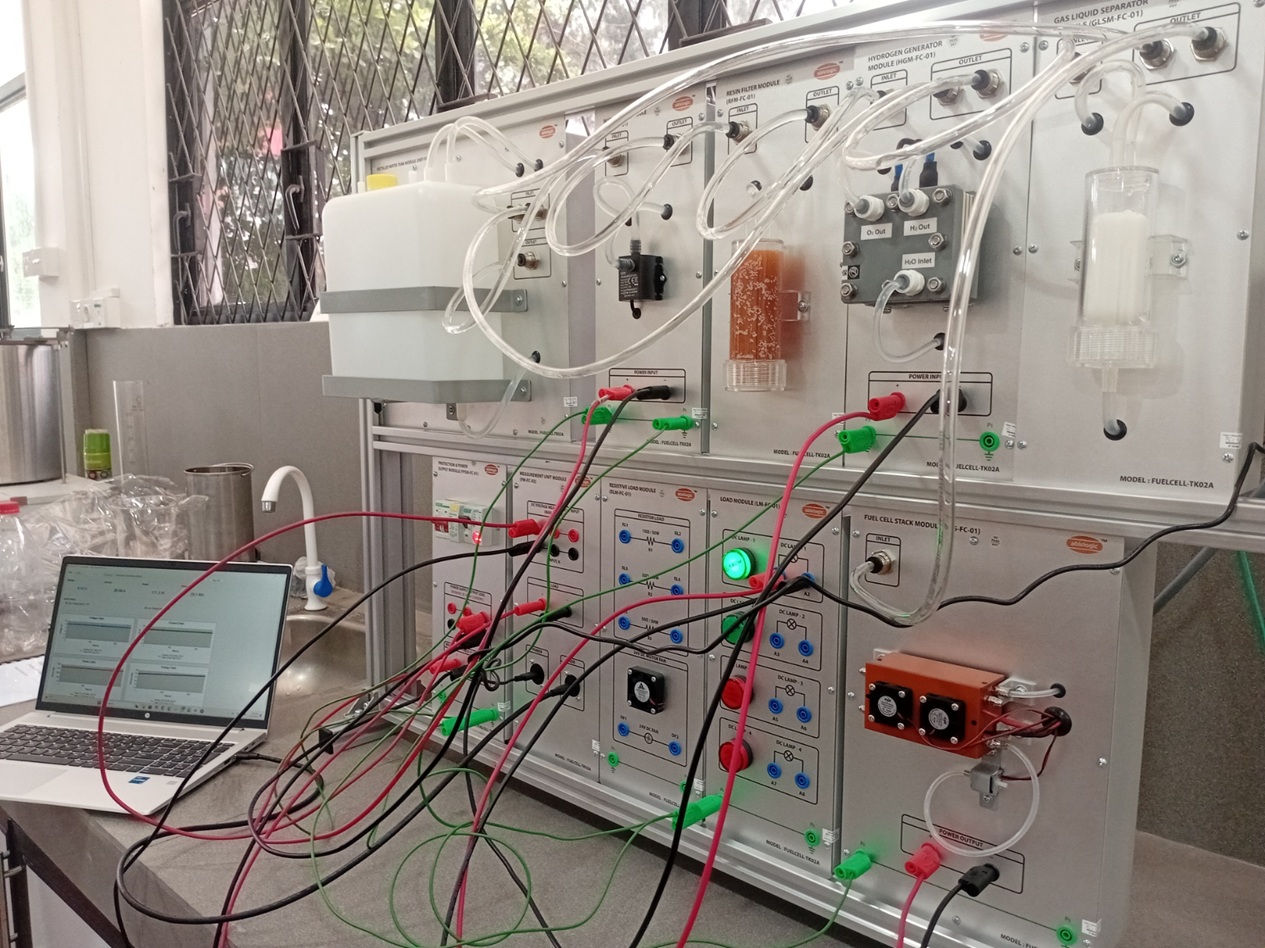
The PEM fuel cell performs the reverse operation by converting the chemical energy stored in hydrogen into electrical energy. Hydrogen supplied to the anode is separated into protons and electrons. The protons migrate through the membrane, while electrons flow through an external circuit, producing usable electrical power. At the cathode, protons, electrons, and oxygen combine to produce water as the only by-product.
This laboratory instrument allows users to investigate important parameters such as hydrogen production rate, electrical efficiency, voltage-current characteristics, power output, energy conversion efficiency, and the effect of operating conditions on system performance. It provides hands-on experience with hydrogen generation, renewable energy storage, and clean power generation technologies.
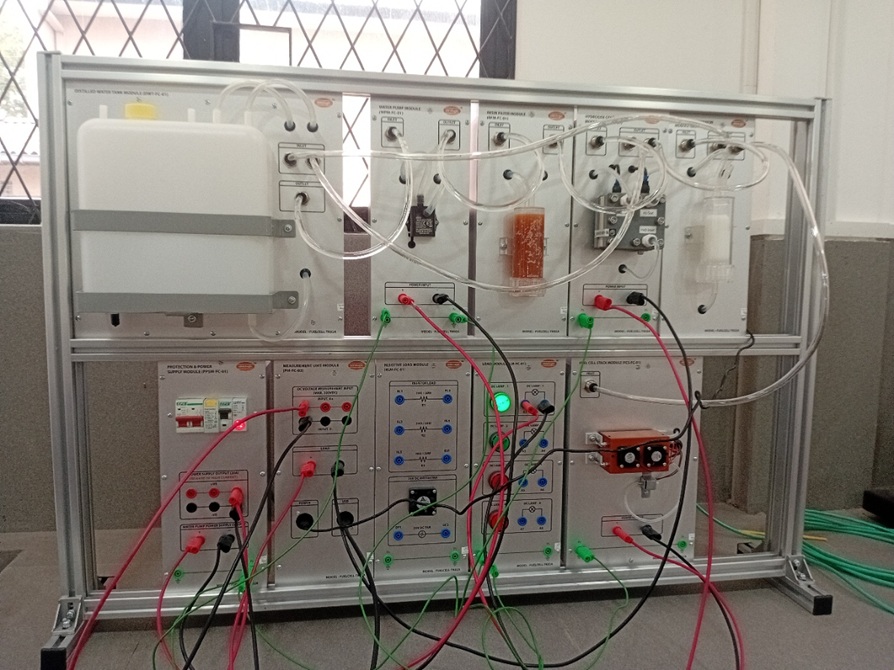
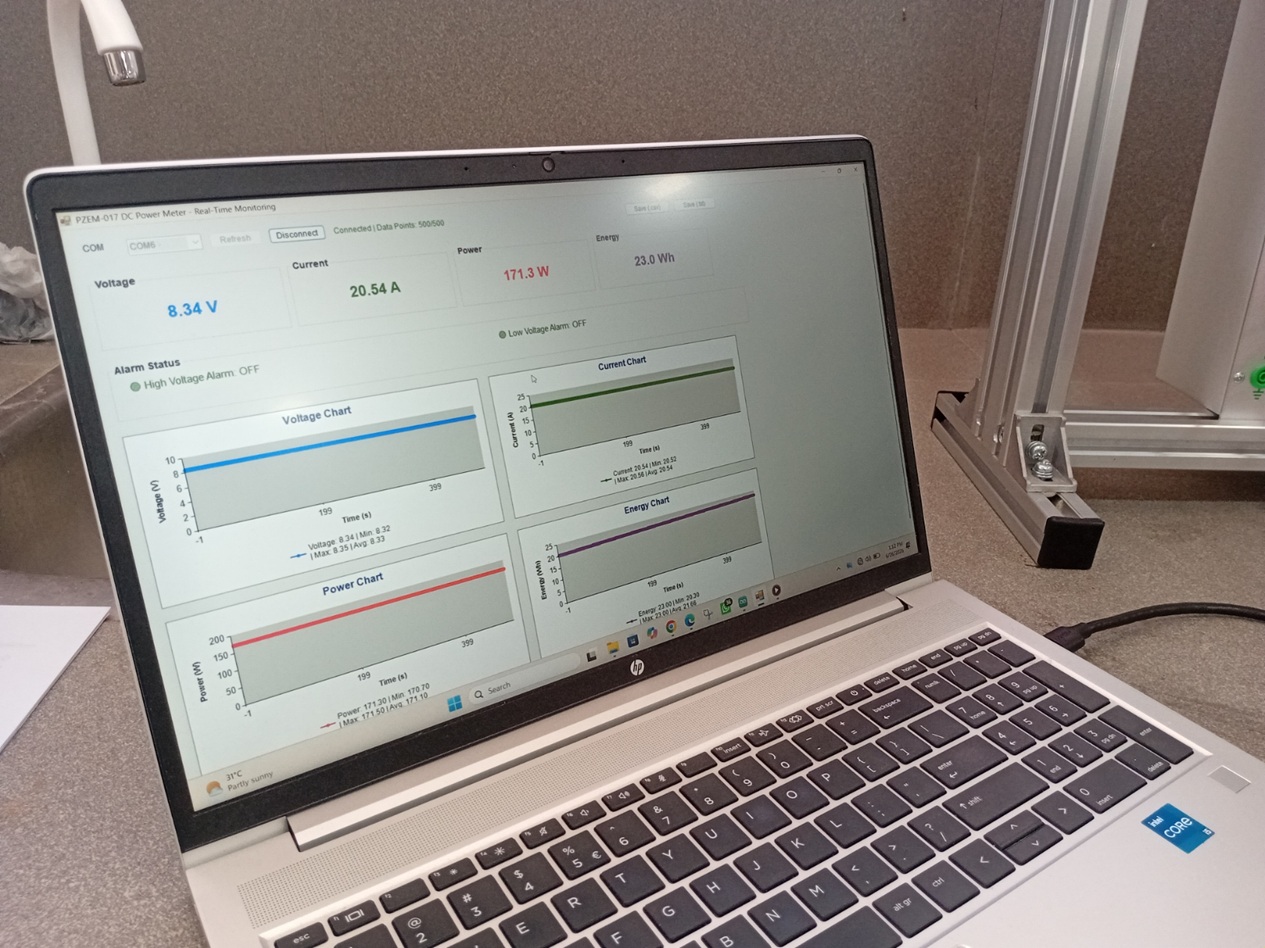
The PEM electrolyzer and fuel cell system plays an important role in modern sustainable energy applications, including renewable energy storage, electric vehicles, portable power systems, and future hydrogen-based energy infrastructure.
Staff
| Academic | Technical |
| Eng. N.C Tantrigoda |